Coffee is the lifeblood of many hikers—a morning ritual to kick-start the day and a welcome energy boost on tough trails. But what does coffee actually do for your body, and are there better alternatives to consider? Let’s break it down.
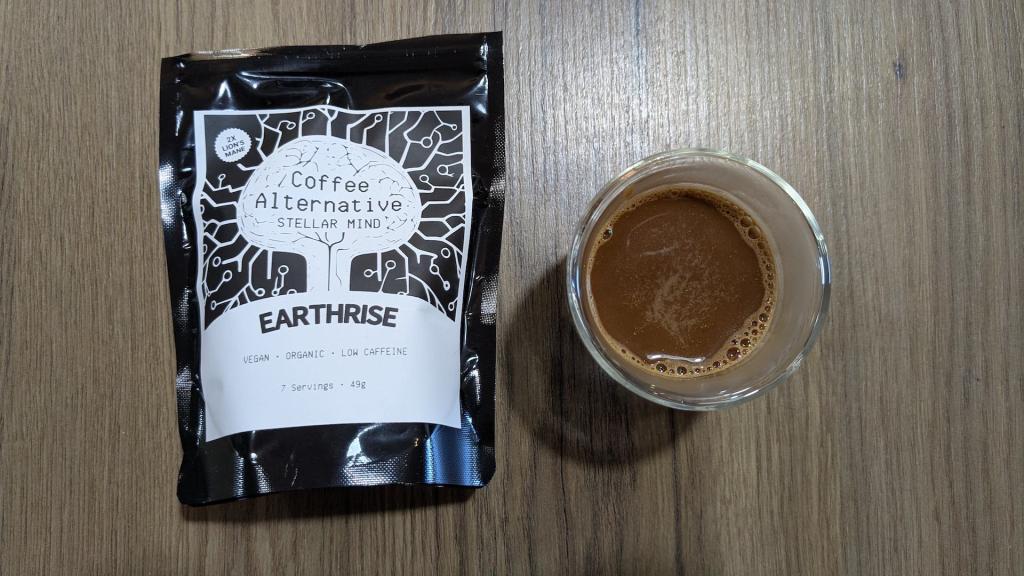
The Good Stuff Coffee Brings to the Table
While I don’t drink coffee, for most of the population coffee isn’t just a tasty pick-me-up; it’s packed with benefits that hikers love:
- Energy Boost: The caffeine in coffee stimulates your central nervous system, reducing fatigue and improving mental alertness which is ideal for early starts or early-afternoon slogs.
- Enhanced Endurance: Research suggests that caffeine can improve endurance by increasing fat oxidation and sparing glycogen stores, helping you go the distance.
- Antioxidants: Coffee is rich in antioxidants like chlorogenic acid, which can combat inflammation and oxidative stress caused by intense physical activity.
- Mood Enhancer: There’s nothing like a hot brew to lift your spirits when the trail gets tough (so I’m told!)
The Not-So-Good Stuff of Coffee & Caffeine
While coffee has its perks, caffeine isn’t without drawbacks, especially for hikers:
- Sleep Disruption: Caffeine can linger in your system for hours, potentially interfering with your sleep and leaving you less rested for multi-day hikes.
- Gastrointestinal Issues: Some hikers find that coffee’s acidity can upset their stomach, which is the last thing you want when you’re hiking.
- Energy Crashes: Caffeine highs are often followed by a dip in energy levels, which can feel like hitting the wall mid-hike. This is especially true if you increase your intake beyond what you’d normally consume at home.
- Dehydration: While research has shown that coffee doesn’t actually have a diuretic effect on people who drink it regularly, it can displace other drinks and result in people consuming less water overall. This effect is minor, but worth noting.
Two Coffee Alternatives to Try
For anyone trying to kick their caffeine habit, or like me, who doesn’t drink it but would like a way to get a morning energy boost, I’ve been on the hunt for some alternatives to try. I’ve already tried the I Am Grounded SUPR Caffeinated Protein Bars (and wow are they delicious!) – you’ll be seeing a review for those come up soon. But for true coffee lovers, the coffee replacement needs to be in liquid form.
Both of the below products include caffeine, but in much smaller doses than the average coffee, so are great bridging drinks if you’ve been a coffee drinker for a long time.
What you choose for an extra morning energy boost comes down to personal preference and how caffeine affects your individual performance. There are heaps of pre-workout style supplements on the market, but I’ve chosen these two brands to consider because they don’t just provide energy, but a whole host of additional benefits.
Why Consider Alternatives?
While coffee may be the go-to trail companion for many, it’s not always the best choice for every hiker or every situation. Alternatives can provide a gentler energy boost, reduce reliance on caffeine, and offer functional benefits tailored to your needs.
Whether you’re looking to avoid caffeine’s potential side effects, support better hydration, or try something new, exploring alternatives can elevate your trail experience. Coffee alternatives I’ve found include additional highly nutritious ingredients that you won’t get in your regular cup of Joe either.
With innovative options on the market, you don’t have to compromise on flavour or convenience. As with any new product for the trail, I always recommend testing it out at home for a few weeks first.
1. EarthRise Coffee Alternatives
EarthRise offers a range of coffee alternatives that are both delicious and trail-friendly. Made from natural, nutrient-dense ingredients like mushrooms, herbs, and adaptogens, these drinks provide a balanced energy boost without the caffeine jitters.
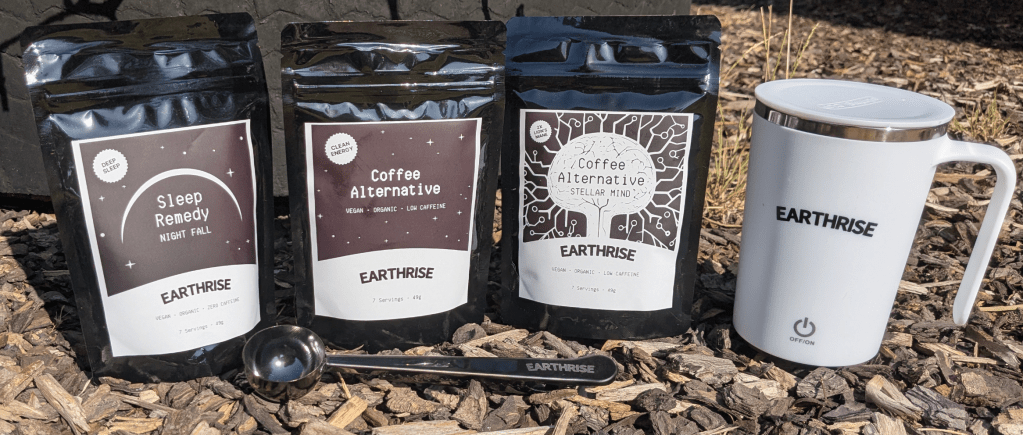
If you want the energy boost without the comedown, and to enjoy deep restorative sleep, EarthRise has multiple products to replace your morning and afternoon brew. There is some caffeine in their daytime blends but it’s far less than your average cup of coffee.
- Rich, Coffee-Like Flavour: EarthRise blends mimic the taste of coffee, making them perfect for those who love the ritual of their morning brew. This might prove challenging for people who don’t like the taste or aroma of coffee (me!) but I’ll keep you posted on that.
- Sustained Energy: By relying on adaptogenic herbs (herbs that help your body recover from and adapt to stress), EarthRise claims to help support your body’s natural stress response, providing even, focused energy, and contributing to a sense of calm.
- Gut-Friendly: With low acidity and gut-loving ingredients, these alternatives are a gentler option for sensitive stomachs.
EarthRise has kindly sent me their sampler bundle (you can grab one here) and I’ll be trying it out over the next month to see if I notice a difference. Stay tuned for a more in-depth article about it once I’ve got my thoughts together!
2. Evolution Botanicals EVO KARM™ Coffee Alternatives
Evolution Botanicals offers a fresh take on caffeine-free drinks with multiple coffee alternatives, one of which is the Carob & Cacao Drink. Here’s why it’s worth a look:
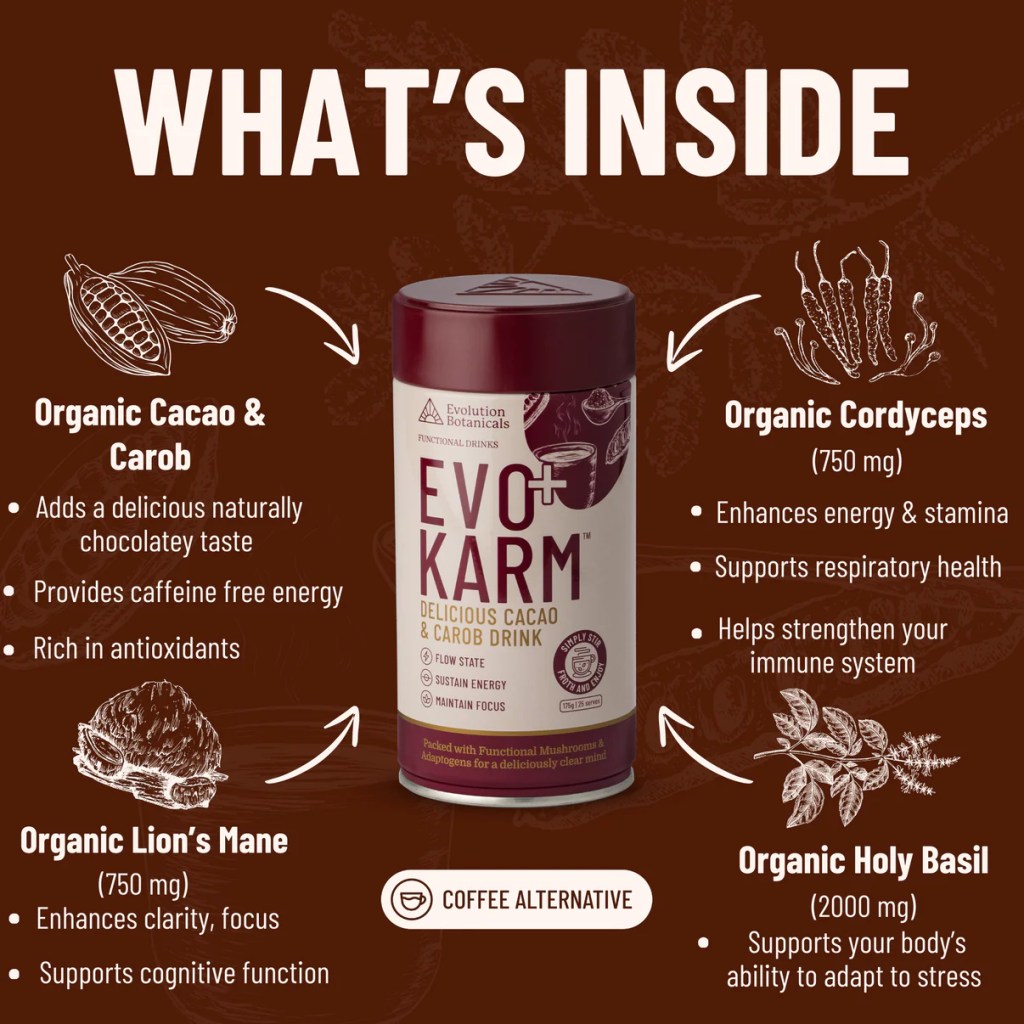
- Low Caffeine: each drink is crafted to retain the rich flavour of traditional coffee but with minimal caffeine. It’s ideal for hikers who want to enjoy a warm cup in the evening without sabotaging their sleep.
- Functional Benefits: EVO KARM™ drinks include ingredients like maca, cacao, and ashwagandha, which can boost energy and support recovery, relaxation, and sleep.
- Convenience: Many of their products come in sachets—perfect for lightweight packing and easy prep on the trail.
Evolution Botanicals have provided me with a sample of a few of their products which could be handy to improve our nutritional intake on trail. I’ve never gone to this level of nutrient optimisation out there and I’m pretty interested in the idea.
If you want to grab some to try for yourself they’ve extended a 10% discount code. Just enter ‘HIKE10’ at the checkout to redeem.
Key Takeaways for the Trail
- Understand Caffeine’s Role: Caffeine offers clear benefits like increased alertness and endurance, but it’s not for everyone. Be mindful of its potential impacts on sleep, and digestion.
- Hydrate Well: Whether you choose coffee or an alternative, always balance it with plenty of water to stay hydrated.
- Explore Alternatives: EarthRise and EVO KARM™ provide functional options that support your energy levels without caffeine’s drawbacks.
- Trial Before the Trail: Always test new drinks at home before heading out to ensure they work well for your body.
Coffee and caffeine alternatives can be a game-changer for hikers seeking sustained energy and fewer side effects.
Why not mix up your trail routine and give one of these options a go?
Stay tuned for a review on both alternatives. If you’ve tried coffee alternatives on the trail, I’d love to hear about it in the comments!
References
Ganio, M. S., Klau, J. F., Casa, D. J., Armstrong, L. E., & Maresh, C. M. (2009). Effect of caffeine on sport-specific endurance performance: A systematic review. Journal of Strength and Conditioning Research, 23(1), 315–324. https://doi.org/10.1519/JSC.0b013e31818b979a
Institute of Medicine (US) Committee on Military Nutrition Research; Marriott, B. M. (Ed.). (1994). Food Components to Enhance Performance: An Evaluation of Potential Performance-Enhancing Food Components for Operational Rations. National Academies Press. Available from https://www.ncbi.nlm.nih.gov/books/NBK209050/
Juliano, L. M., & Griffiths, R. R. (2004). A critical review of caffeine withdrawal: Empirical validation of symptoms and signs, incidence, severity, and associated features. Psychopharmacology, 176(1), 1–29. https://doi.org/10.1007/s00213-004-2000-x
Liang, N., & Kitts, D. D. (2014). Antioxidant property of coffee components: Assessment of methods that define mechanisms of action. Molecules, 19(11), 19180–19208. https://doi.org/10.3390/molecules191119180
Maughan, R. J., & Griffin, J. (2003). Caffeine ingestion and fluid balance: A review. Journal of Human Nutrition and Dietetics, 16(6), 411–420. https://doi.org/10.1046/j.1365-277x.2003.00477.x
Panossian, A., & Wikman, G. (2010). Effects of adaptogens on the central nervous system and the molecular mechanisms associated with their stress-protective activity. Pharmaceuticals (Basel), 3(1), 188–224. https://doi.org/10.3390/ph3010188
 The Hiker's Nutritionist
Leave a comment